Balkan countries lack the tools and drive to combat crypto fraud.
Western Balkans’ criminal and procedural codes do not contain provisions that specifically refer to crypto-related crimes. Some prosecutors argue that this shortcoming makes it difficult to seize virtual assets and creates legal uncertainties that undermine their ability to bring cases to court.1
While some recent prosecutions have enabled seizures under current laws, such cases remain the exception rather than the norm. Across the region, only seven cases of virtual asset confiscation have been recorded to date: three in Albania, two in Kosovo, one in Serbia, and one in Bosnia and Herzegovina.2
A recent case in Albania, led by the Special Structure Against Corruption and Organized Crime (SPAK), resulted in the seizure of US$10 million in cryptocurrency with the assistance of a global stablecoin company and a major international exchange.3 The case highlights that success sometimes depends less on legal gaps than on the resourcefulness and persistence of law enforcement, backed by international cooperation and private sector buy-in.
A failure by national authorities to set up sovereign cryptocurrency wallets remains a critical operational barrier throughout the Western Balkans. Without them, virtual asset seizures are technically possible but require partnerships with other countries or private companies. Criminal proceeds in cryptocurrency have been seized by several Western Balkan nations with the support of other countries, but Albania remains the only regional country that has built a partnership with the private sector to seize virtual assets.4
However, challenges in seizing virtual assets are dwarfed by a lack of regional commitment, cooperation, procedures and operational resources dedicated to tackling crypto crime. The lack of commitment by Western Balkan governments is noticeable by an absence of legislative frameworks and allocation of financial and operational resources to financial intelligence units, law enforcement and supervisory institutions.
This sits alongside a more general failure by regional countries to assess the vulnerabilities of the crypto sector to organized crime, particularly money laundering, despite the Financial Action Task Force’s explicit requirement that such risks be evaluated as part of national anti-money laundering and countering the financing of terrorism assessments.5
Serbia, Bosnia and Herzegovina and North Macedonia are the only countries among the six Western Balkan nations to have conducted threat assessments of money laundering and terrorist financing related to virtual assets. Serbia was the first country to adopt the assessment in 2021.6 Conducted in 2024, the assessment in Bosnia and Herzegovina found that suspicious and crime-related transactions in this space remain relatively small.7 North Macedonia completed its assessment in 2025, but it has not yet been published.8
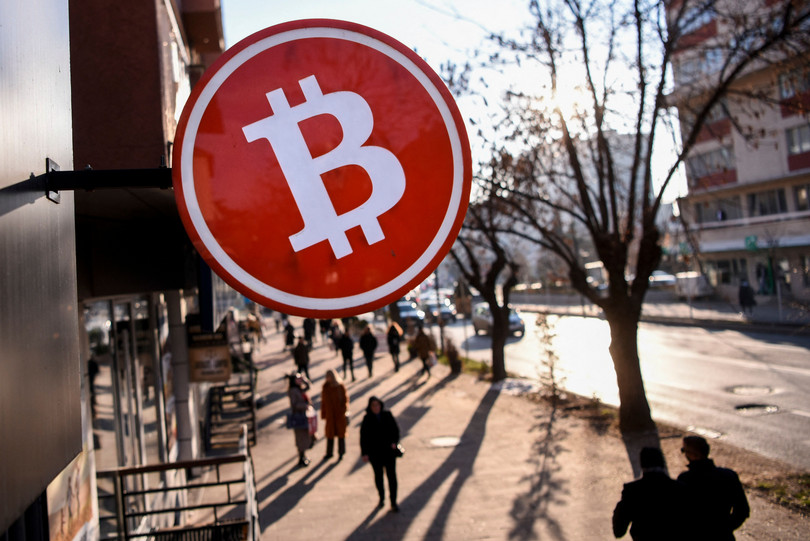
A Bitcoin exchange in Pristina, Kosovo. Proactive investigations into cryptocurrency fraud are still a rarity in the Western Balkans, where countries lack the necessary legislative frameworks to investigate this form of crime.
Photo: Armend Nimani/AFP via Getty Images
Fragmented probes of crypto crime
In the Western Balkans, the understanding of cryptocurrencies within police structures remains generally limited.9 Expertise is concentrated largely in specialized cybercrime units, which have developed some investigative capacity, helped by UK support.
Recently, the UK provided financial intelligence units (FIUs) in Albania, Kosovo, Montenegro and North Macedonia with blockchain analysis tools, enabling the tracing and identification of cryptocurrency transactions and leading to initial investigations.10 North Macedonia’s criminal intelligence sector and FIU acquired two such tools. The country’s criminal and intelligence sector supports the cybercrime sector with intelligence and analysis for crypto-related investigations, as the latter often lacks access to specialized tools. They receive data extracted from phones to check for digital wallets and cryptocurrency transactions.11 In Albania, Kosovo and Montenegro, FIUs and cybercrime units have also received technical tools, enabling some level of proactive analysis.
However, police units that are responsible for financial investigations face existing staff shortages, leaving them with limited capacity to acquire or integrate cryptocurrency expertise into their investigatory toolkit.12 This has left crypto-related probes largely confined to cybercrime cases, rather than integrated into broader financial crime or organized crime investigations.
Currently, the region lacks clear procedures or guidelines for investigating crypto cases or integrating them into financial system investigations. Instead, cryptocurrency stashes typically come to light when cybercrime units uncover them during the investigation of cybercrimes, notably scam call centres, frauds, illicit online marketplaces and other similar cases.
For example, the two cases in Kosovo in which cryptocurrencies were seized stem from cybercrime investigations conducted in cooperation with US authorities.13 In both cases, the value of the seized holdings was not disclosed and the seizures were carried out by US agencies, as Kosovo lacks both a national crypto wallet and agreements with international exchanges to secure and manage crypto assets.14
Albania’s SPAK is the leading institution within the Western Balkans in seizing cryptocurrencies, albeit with a very modest track record so far. In addition to its landmark case involving the seizure of US$10 million in crypto assets, it has handled two other cybercrime cases that have involved confiscations. One case saw the seizure of a mere US$15 000, while the other yielded an undisclosed amount linked to the disruption of the Rydox illicit marketplace, with US and Kosovan authorities also participating in this operation.15
Serbia’s sole successful seizure came as part of a joint operation against a cryptocurrency fraud network with German, Cypriot and Bulgarian law enforcement.16 Strongly supported by Eurojust and Europol, this operation resulted in the arrest of 14 people in Serbia and one person in Germany, along with the seizure of several crypto wallets containing a total of approximately US$1 million. These examples highlight how crypto seizures usually stem from international collaboration and support rather than originating from a domestic financial investigation into serious and organized crime.
Proactive investigations into cryptocurrency fraud remain rare, although Serbian prosecutors are required to conduct parallel financial investigations in every organized crime case. This has, since 2022, included explicit instructions to examine the risk of crypto misuse for money laundering, theoretically embedding digital assets into the core of financial crime investigations.17
At the regional level, fragmentation is exacerbated by poor cooperation between cybercrime units and other law enforcement agencies. Police intelligence and analysis units, which play a vital role in serious and organized crime cases, are only marginally involved in crypto-related inquiries. Most lack both the tools and the expertise to contribute meaningfully, apart from in North Macedonia, where UK support has centred specifically on bolstering the criminal and financial intelligence sectors.
Cooperation between the police and FIUs is generally good but needs to be enhanced specifically for cryptocurrency-related crimes.18 Specific aspects of crypto investigations are not included in the current frameworks for exchanging information.
Public–private cooperation in crypto-related investigations is almost non-existent across the Western Balkans. Virtual asset service providers, many of which operate without licences or oversight, are viewed with suspicion rather than as potential partners.
Formal cooperation channels do not exist, although there are some informal exchanges of information. The Kosovan police, for example, are exploring partnerships with universities to draw on students’ knowledge.19 A structured mechanism for dialogue between public authorities, the private sector and academia is missing across the region.
From fragmentation to coordination
The lack of systematic financial investigations in parallel with organized crime cases has long been flagged by the European Commission as an issue in the Western Balkans, but the integration of crypto into such investigations is even rarer. Sporadic seizures of criminal proceeds held in cryptocurrencies and ad hoc investigations demonstrate that progress is possible, but systemic weaknesses persist, most notably inadequate legislation, an absence of national wallets, limited expertise, and insufficient coordination between law enforcement and supervisory bodies.
Courts across the region, already overburdened with complex organized crime cases, face additional challenges in handling crypto-related prosecutions that require technical expertise and cross-border cooperation. Without stronger national strategies, standardized procedures and mechanisms for public–private collaboration, the region risks becoming a safe haven for crypto-enabled laundering.
Ultimately, only a coordinated regional approach that integrates financial intelligence, law enforcement, regulators and the private sector can close the gaps that organized criminal groups are exploiting. Otherwise, crypto will continue to serve as an attractive store of value — or cash-out option — for illicit wealth in the Balkans.
Notes
-
Interviews with prosecutors in Tirana, Pristina and Skopje, July 2025. ↩
-
GI‑TOC, Seizing crime-related virtual assets remains a challenge in the Western Balkans, Risk Bulletin of Illicit Economies in South Eastern Europe, Issue 21, May 2025. ↩
-
SPAK, Njoftime për shtyp, 22 January 2025. ↩
-
Ibid. ↩
-
FATF, Guidance for a risk-based approach to virtual assets and virtual asset service providers, 2019 (updated 2021); FATF, International standards on combating money laundering and the financing of terrorism & proliferation, October 2025 (see Recommendation 1 for national risk assessments and Recommendation 15 for virtual assets and virtual asset service providers). ↩
-
Serbian Administration for the Prevention of Money Laundering, Serbia updates its understanding of risk in various areas, 1 October 2021. ↩
-
Ministry of Security of Bosnia and Herzegovina, Threat assessment of money laundering and terrorist financing linked with virtual assets, 2024. ↩
-
Council of Europe, North Macedonia assessed the money laundering and financing of terrorism risks of virtual assets and virtual asset service providers, 2025. ↩
-
Interviews with police officers in Tirana, Pristina, Skopje and online, July 2025. ↩
-
Interview with a Kosovan police officer, Pristina, July 2025; interview with a financial intelligence officer, Skopje, July 2025. ↩
-
Interview with a police officer, Skopje, July 2025. ↩
-
Interviews with police officers in Pristina and Skopje, July 2025. ↩
-
Interview with a police officer, Pristina, July 2025. ↩
-
Ibid. ↩
-
SPAK, Njoftim për shtyp, 10 February 2025; SPAK, Njoftim për shtyp, 12 December 2024. ↩
-
Eurojust, Takedown of fraudulent cryptocurrency network in Bulgaria, Cyprus and Serbia, 12 January 2023; Europol, Call centres selling fake crypto taken down in Bulgaria, Serbia and Cyprus, 13 January 2023. ↩
-
Administration for the Prevention of Money Laundering of Serbia, National risk assessment, 2024. ↩
-
Interviews with police officers, FIU officials, prosecutors and experts in Tirana, Pristina, Skopje and online, July 2025. ↩
-
Interview with a police officer, Pristina, July 2025. ↩