Balkan criminal networks are gaining ground in Australia’s drug market.
Australia is one of the top consumer markets for illicit drugs globally,1 making it a prime target for organized crime. In 2023/24, organized crime cost the country up to AU$82.3 billion, with drug-related activities accounting for nearly AU$19 billion.2 Australia saw one of the sharpest increases in cocaine trafficking scores in the Global Organized Crime Index between 2021 and 2023.3 The influence of foreign criminal actors also increased during the same period.4 Authorities have estimated that at least 70% of organized crime threats in Australia are linked to foreign criminal networks.5
High demand, isolated geography and high street prices make Australia particularly profitable for international drug traffickers. Therefore, it is no surprise that Balkan criminal networks, which are among the key players in the global cocaine trade,6 have a presence in the country, although the nuances of their role requires more investigation.
Balkan networks — consisting of Albanian-speaking members mainly from Albania, Kosovo and North Macedonia, and Slavic-speaking groups primarily led by Serbs and Montenegrins — excel at drug trafficking to Europe.7 Both of these categories are active in Australia.
Montenegrin sailors
In May 2023, Australian authorities intercepted 849.5 kilograms of cocaine offshore.8 Two Montenegrin crew members — the captain and the chief engineer — had planned to dump the drugs into the sea near Fremantle, ahead of collection by another ship. When the transfer failed, the captain flooded the ballast tank to hide the drugs and ordered the crew to falsify the logbook.9
A year earlier, in May 2022, Australian authorities disrupted a trafficking scheme involving 320 kilograms of cocaine.10 A Montenegrin ship captain allegedly loaded the cocaine onto a bulk carrier at an international port and dropped the packages into the sea near Port Hedland, also in Western Australia. Two men — a German and an Australian — retrieved the drugs using a small boat. All three were arrested and charged.11 Both cases demonstrate how senior crew members bypass cargo controls that are meant to regulate international shipping.
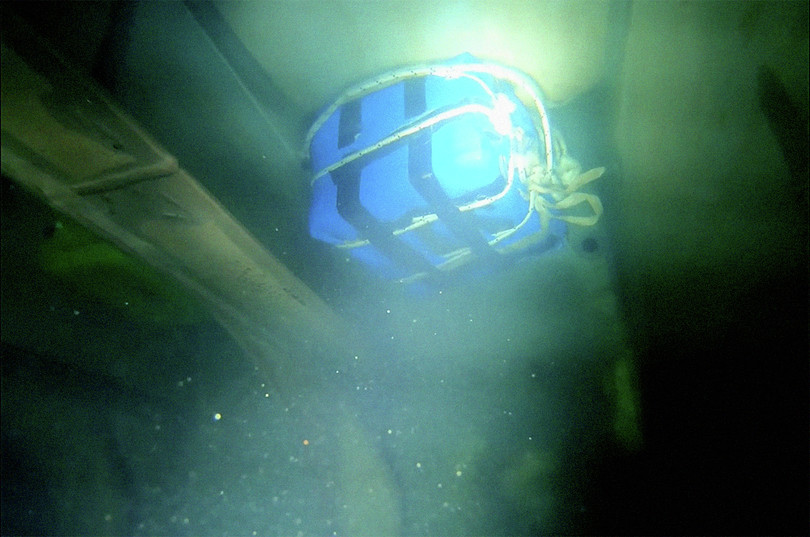
In May 2023, a Montenegrin ship captain reportedly tried to hide cocaine destined for Australia by filling the ballast tank with water.
Photo: Screenshot from an Australian Federal Police video via Hightail. View the video here.
In September 2024, an international police operation codenamed Kraken penetrated Ghost, an encrypted communications platform.12 The platform was reportedly used by criminal networks, including those associated with Albanian organized crime, to coordinate illegal activities. Based on intelligence from Ghost, Australian nationals with suspected links to Albanian groups were arrested in September 2024 and February 2025 for alleged involvement in cannabis cultivation and trafficking.13
This case not only presents further evidence of Balkan criminal groups’ activity in Australia, but also demonstrates how technology has facilitated international cooperation among criminals of different nationalities.
Balkan criminal networks are not a new phenomenon in Australia. Their presence can be traced back to the Yugoslav diaspora from the 1980s and early 1990s.14 Over time, some individuals became involved in organized crime, often through outlaw motorcycle gangs, which Australian police see as a major threat.15 A key figure was Zeljko Mitrovic, a high-ranking Hells Angels member of Serbian descent. He was killed in 2013 by his former methamphetamine cook, Michael Basanovic,16 who was sentenced three years later to a minimum of 21 years in prison for his murder.17
Balkan groups currently compete in Australia with other powerful actors such as Italy’s ’Ndrangheta, while Middle Eastern, Asian and Chinese syndicates also remain highly active.18 More recently, Brazil’s Primeiro Comando da Capital (PCC), Latin America’s biggest criminal organization,19 has also emerged as a significant threat to Australia.20
Balkan networks could gain even more influence in Australia if they extend collaborations in Western Europe and Latin America, where they have respectively already worked with the ’Ndrangheta and the PCC.21 Such partnerships provide Balkan networks access to established routes and logistics, alongside protection in new environments.
Relying on diaspora
Montenegro’s organized criminal networks have a long history in Australia. Over time, criminal groups have strategically expanded their areas of operation using their strongholds in Latin America, wider international connections and diaspora communities in Australia itself. By leveraging existing kinship and social ties, these groups aim to strengthen their presence in Australia’s illicit drug market, facilitating logistics, transportation and distribution efforts.
For example, Vaso Ulić, a Montenegrin of Albanian descent, has been linked by law enforcement to international drug trafficking for more than two decades.22 He has drawn the attention of police in both the Western Balkans and Australia, where he is considered a key figure in transnational cocaine smuggling networks.23
Ulić reportedly moved to Australia in 1979, initially engaging in petty crime in Sydney.24 Over time, he allegedly became the head of a network involved in large-scale drug trafficking.25 Although primarily based in Sydney, his network reportedly operated across Victoria, Queensland and Western Australia. Ulić left Australia in 2004 and returned to Montenegro, where he is suspected by the Montenegrin authorities of continuing his involvement in international drug smuggling.26
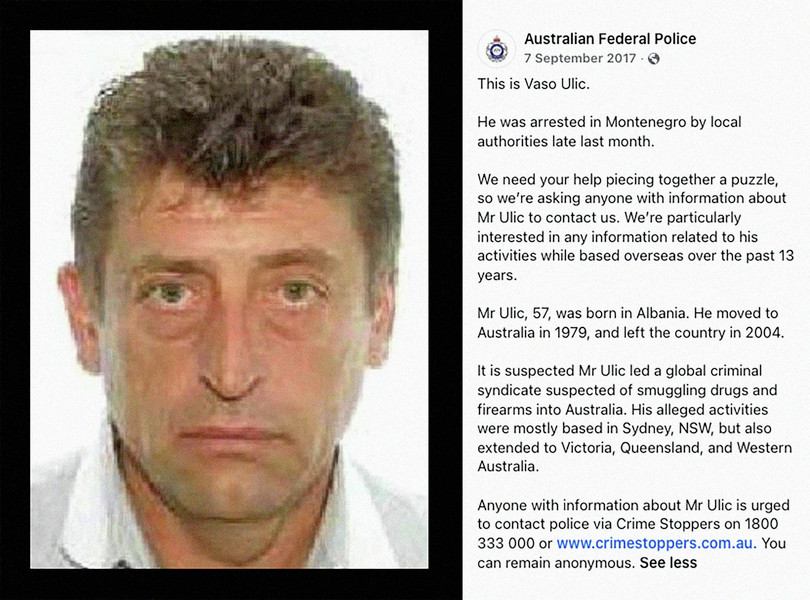
In 2017, the Australian Federal Police publicly requested more information about Vaso Ulić’s activities in Australia since 2004.
Photo: Australian Federal Police Facebook page
Around 2020, he allegedly partnered with the Kavač clan, one of two major Slavic-speaking criminal organizations from Montenegro, in the cocaine trade.27 Between 2020 and 2022, he was suspected of leading a group of more 10 members that smuggled at least 2.47 tonnes of cocaine from Colombia to Australia via Ecuador.28
The cocaine was allegedly purchased for €4 500 per kilogram and sold in Australia for up to €80 000 per kilogram, with around 20% of these revenues used to cover extraction costs in Australia.29 For coordination operations, the group members reportedly used two encrypted communication platforms: Sky ECC and ANOM.30 In May 2025, the Podgorica Higher Court confirmed a cocaine trafficking indictment against Ulić, two alleged high-ranking members of the Kavač clan and 17 other suspects.31 In October 2025, Ulić stated before a judge in Podgorica that he was not guilty of the police accusations.32 The trial against Ulić is ongoing.
Ulić had also been charged and convicted for earlier drug shipments to Australia. In 2019, he received a two-year prison sentence after admitting to organizing drug smuggling to Australia in 2008, specifically the maritime transport of 60 kilograms of high-purity MDMA powder.33
Another relevant example is Gjelosh Nikollaj, who, like Ulić, has roots in the Montenegrin-Albanian community and a history of drug trafficking. Nikollaj was imprisoned in 2006 for importing 161 kilograms of MDMA into Australia and was out on parole at the time of his arrest in 2021.34 The arrest took place as part of an operation code-named Ironside,35 which intercepted millions of messages on the ANOM app.36 He was arrested alongside two other people when he attempted to collect a shipment believed to contain 3 tonnes of cocaine from a storage facility in Sydney. The group allegedly sourced cocaine in Colombia, transported it to Ecuador using fast boats and intended to ship it on to Australia inside toilet paper rolls.37 Nikollaj was granted bail in March 2025 after spending almost four years in custody awaiting trial. His bail conditions included an AU$3 million surety, electronic monitoring and home detention.38
The cases of Ulić and Nikollaj suggest a pattern in which Montenegrin-Albanian actors serve as facilitators in global drug supply chains to Australia. The same applies to two individuals from Bosnia and Herzegovina, Edin Gačanin and Sani al-Murda.
Gačanin, a Bosnia and Herzegovina native with Dutch citizenship, is a major figure in international drug trafficking and leads the Tito and Dino cartel.39 His drug network is connected to Latin America, South Africa and Australia. It reportedly established front companies in Colombia, Peru and Ecuador, posing as legitimate exporters of berries, cocoa and coal to conceal substantial cocaine shipments. Some of the alliances that support his outreach in Australia connect to Dubai, where some high-ranking members of Balkan criminal networks reside.40
South Africa has become an important transit hub for cocaine moving from Latin America to Australia, as evidenced by Gačanin’s operations relying heavily on Durban’s port,41 where cocaine shipments were repackaged before being sent to their final destinations in Australia. Allegedly, his influence over specific ports and terminals in Durban enabled his organization to manipulate shipping procedures and minimize detection.42
Gačanin reportedly introduced Sani al-Murda — an associate of the Škaljari clan, Montenegro’s second strongest criminal organization — to the cocaine business.43 Australia was a key destination for al-Murda’s operations, as evidenced by Sky ECC communications within his network. In February 2021, al-Murda claimed he sent 600 kilograms of cocaine to Australia and awaited confirmation. He stated that his network could smuggle between 1 000 and 1 500 kilograms aboard fishing vessels, but was cautious about increasing shipments above that range.44
In November 2023, a Dutch court sentenced Gačanin in absentia to seven years in prison for drug trafficking from Latin America to Europe.45 Meanwhile, Belgium is searching for al-Murda on the basis of an INTERPOL Red Notice.46 Gačanin, al-Murda and their lawyers have not issued any statements regarding the accusations.
Further growth ahead?
Seizures, arrests and criminal proceedings in Australia and the Western Balkans point to the growing presence of both Albanian-speaking and Slavic-speaking criminal groups in Australia’s cocaine trade. While Balkan criminal networks do not yet dominate Australia’s drug market, their influence is rising steadily. The history of their criminal activities demonstrates their ability to expand and to adapt swiftly. Their growing influence is built on three interrelated dynamics: strategic alliances with non-Balkan organizations, inter-group cooperation between Slavic and Albanian groups, and technological adaptation.
Technological advances — especially encrypted apps — have been crucial to these groups’ activity in Australia. This technology facilitates the planning of maritime shipments and drug transfers while minimizing detection risks. Although these tools can be risky if hacked, Balkan groups are quick to adapt to new communication methods.
Collectively, these developments indicate that Western Balkan networks are strategically positioned to expand further in Australia, leveraging alliances, cooperation, technology and new trafficking routes.
Notes
-
Australian Federal Police, Drug crime; GI‑TOC, Global Organized Crime Index; Angus Whitley, The world’s biggest cocaine user is Australia, Bloomberg, 26 June 2025. ↩
-
Organized crime generates costs on three levels: direct costs refer to expenditures related to the consumption of illicit substances, including healthcare and productivity losses among users; consequential costs include crimes committed to finance drug use or to support organized crime operations, as well as offences resulting from involvement in such activities; and indirect costs encompass public and private sector spending on prevention, law enforcement, justice and harm reduction responses to organized crime. Alexandra Voce and Anthony Morgan, The costs of serious and organised crime in Australia, 2023–24, Australian Institute of Criminology, 6 November 2025. ↩
-
GI‑TOC, Global Organized Crime Index. ↩
-
Ibid. ↩
-
Australian Federal Police, Serious and organised crime. ↩
-
Fatjona Mejdini, Cocaine connections: Links between the Western Balkans and South America, GI‑TOC, April 2025. ↩
-
Europol, Decoding the EU’s most threatening criminal networks, 9 April 2024. ↩
-
Australian Federal Police, Two cargo carrier crew charged over WA 850kg cocaine bust, 16 June 2023; GI‑TOC, Montenegrin sailors are involved in global drug trafficking schemes, damaging the reputation of Montenegro’s rich maritime tradition, Risk Bulletin of Illicit Economies in South Eastern Europe, Issue 13, September–October 2022. ↩
-
Australian Federal Police, Two cargo carrier crew charged over WA 850kg cocaine bust, 16 June 2023. ↩
-
Australian Federal Police, Ship captain charged over WA 320kg cocaine plot, 24 May 2022. ↩
-
Ibid. ↩
-
Australian Federal Police, AFP Operation Kraken charges alleged head of global organised crime app, 18 September 2024. ↩
-
Australian Federal Police, Operation Kraken-Dathomir: Two Victorian women charged over seizure of 58kg cannabis, $395k in illicit cash and firearms, 5 February 2025; Australian Federal Police, Operation Kraken-Dathomir: Victorian man charged over seizure of 58kg cannabis and $395k in illicit cash, 19 September 2024. ↩
-
Walter Kemp, Transnational tentacles: Global hotspots of Balkan organized crime, GI‑TOC, July 2020. ↩
-
Australian Federal Police, Serious and organised crime. ↩
-
Walter Kemp, Transnational tentacles: Global hotspots of Balkan organized crime, GI‑TOC, July 2020. ↩
-
Remorseless NSW father-son killers jailed, 9 News, 21 March 2016. ↩
-
GI‑TOC, Global Organized Crime Index: Australia, September 2023. ↩
-
Gabriel de Santis Feltran, Isabela Vianna Pinho and Lucia Bird Ruiz-Benitez de Lugo, Atlantic connections: The PCC and the Brazil-West Africa cocaine trade, GI‑TOC, August 2023; Brazil’s biggest drug gang has gone global, The Economist, 23 November 2023. ↩
-
Rodrigo Duton, The Pacific cocaine corridor: A Brazilian cartel’s pipeline to Australia, Australian Strategic Policy Institute, 6 February 2025. ↩
-
Fatjona Mejdini, Cocaine connections: Links between the Western Balkans and South America, GI‑TOC, April 2025. ↩
-
Olivera Lakić and Biljana Nikolić, General komandovao ispod radara (1), Libertas Press, 29 October 2025; Olivera Lakić and Biljana Nikolić, A obećao je da će biti dobar (2), Libertas Press, 31 October 2025; Olivera Lakić and Biljana Nikolić, General okupio staru gardu (3), Libertas Press, 3 November 2025; Biljana Nikolić, General u obruču Specijalnog tužilaštva (4), Libertas Press, 7 November 2025. ↩
-
Aussie crims running world’s biggest drugs cartel: report, 9 News, 1 June 2015; Nick Ralston, Organised crime paying low prices to import drugs into Australia, The Sydney Morning Herald, 22 January 2016; Graeme Powell, Accused drug kingpin Vaso Ulic arrested in Montenegro over $40m ecstasy bust, ABC News, 31 August 2017; Caryn Dolley, FBI phone hack — messages reveal suspected ‘drugs in toilet rolls’ plot tied to Australia and SA, Daily Maverick, 24 March 2025. ↩
-
Gary Adshead and Sean Cowan, Overlord runs drug trade from afar, The West Australian, 25 May 2010. ↩
-
Gary Adshead, Who is alleged drug kingpin Vaso Ulic?, The West Australian, 30 August 2017. ↩
-
U Crnoj Gori uhapšeno devet članova kriminalne grupe osumnjičene za šverc 2,5 tone kokaina, Radio Free Europe, 17 July 2024; Radmila Grbić, Crnogorski mafijaši rutama Pabla Eskobara (FOTO), Libertas Press, 24 July 2024. The Libertas Press article contains the Podgorica court decision and rationale from 19 July 2024 regarding the detention of Ulić and 14 other associates on suspicion of organized crime. ↩
-
Ibid. ↩
-
Radmila Grbić, Crnogorski mafijaši rutama Pabla Eskobara (FOTO), Libertas Press, 24 July 2024. ↩
-
Ibid. ↩
-
Radmila Grbić, Potvrđena optužnica protiv Vasa Ulića i još 19 osumnjičenih za šverc 2,5 tone kokaina, Libertas Press, 19 May 2025. ↩
-
Komnen Radević, Vaso Ulić: Nisam kriv, niko mi ne može odrediti sa kim ću da sjedim i pijem kafu, Vijesti, 23 October 2025. ↩
-
Milica Vojinović, Vasu Uliću dve godine zatvora za organizovanje međunarodnog šverca droge, KRIK, 1 October 2019. ↩
-
Madeline Crittenden, Gjelosh Nikollaj granted bail after alleged AN0M plot to import two tonnes of drugs, The Daily Telegraph, 14 March 2025; Fergus Hunter and Daniella White, $100 million gambled on pokies in one week led police to historic cocaine bust, The Sydney Morning Herald, 4 June 2021. ↩
-
Fergus Hunter and Daniella White, $100 million gambled on pokies in one week led police to historic cocaine bust, The Sydney Morning Herald, 4 June 2021. ↩
-
Australian Federal Police, Smashing criminal networks, 8 August 2024; Shannon Tonkin, AN0M 66 become AN0M 48 as self-confessed drug dealers, gun traffickers plead out, The Daily Telegraph, 29 April 2025. ↩
-
Fergus Hunter and Daniella White, $100 million gambled on pokies in one week led police to historic cocaine bust, The Sydney Morning Herald, 4 June 2021. ↩
-
Ibid. ↩
-
Fergus Shiel, Marcos Garcia Rey and Jelena Cosic, A notorious drug kingpin set up shell companies in the British Virgin Islands and to employ alleged cartel underlings, documents show, International Consortium of Investigative Journalists, 20 August 2024. ↩
-
Fatjona Mejdini and Fabian Zhilla, A safe haven in the Gulf: Balkan criminals and their money are hiding in the United Arab Emirates, GI‑TOC, 19 April 2022; GI‑TOC, A golden opportunity for UAE?, 26 June 2024. ↩
-
Caryn Dolley, Connecting the global drug trafficking dots — Durban and Dubai linked to cocaine smuggling ‘supercartel’, Daily Maverick, 19 October 2024. ↩
-
Interview with an international investigative journalist, Sarajevo, November 2024; interview with a senior law enforcement official from Bosnia and Herzegovina, Sarajevo, November 2024. ↩
-
Avdo Avdić, Vlasnik sarajevskog restorana Dos Hermanos jedan je od čelnika Škaljarskog klana: Sani Al Murda organizirao pokušaj ubistva vođe Kavačana Radoja Zvicera. Kontroliše krijumčarenje tona kokaina. Skriva se u Turskoj nakon što je misteriozno pobjegao tužiocim, Istraga, 15 July 2024. ↩
-
Interview with an intelligence analyst from Bosnia and Herzegovina, Sarajevo, December 2024. Sky ECC communications by Sani al-Murda were made available to the GI‑TOC during this interview. ↩
-
Zdravko Ljubas, Bosnia cracks down on international drug cartel; police officials among suspects, OCCRP, 22 April 2024. ↩
-
Borka Cerić, Turska odbila izručiti državljanina BiH Sanija el-Murdu: Narkobos prao novac u Sarajevu, Dnevni avaz, 20 August 2023. ↩